
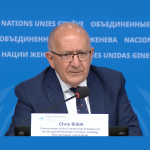
Australia’s Special Envoy to Combat Antisemitism, Jillian Segal told Senate Estimates on Tuesday, in response to a question from Senator David Shoebridge regarding the use of the IHRA definition of anti-Semitism in the ‘Envoy’s plan‘, that Zionist settler colonialism is misunderstood.
Segal said the misunderstandings of Zionist settler colonialism is being fed to people on social media and it’s deliberate.
Israel’s genocide in Gaza is widely described as the world’s first livestreamed genocide.
The contentious IHRA definition of anti-Semitism conflates criticism of Zionism and Israel as anti-Semitism. The original author, Kenneth Stern now rejects its use in regulating anti-Semitism due the potential of its weaponisation to silence free speech.
Senator Shoebridge: You’ve provided (in the plan) a dataset that appeared to track two kinds of what you assert is anti-Semitism, what’s described as Judeophobia, which is probably the traditionally understood appalling behaviour of anti-Semitism and then another thing called anti-Zionist anti-Semitism, which seems to have marker question about if people agree to comparisons between the actions of the Israeli Defence Force (IDF) and Nazis.
That was one of your markers for anti-Zionist anti-Semitism, is that right?
Segal: Yes Senator.
Senator Shoebridge: You would be aware wouldn’t you, that senior members of the Israeli Defence Force have made that comparison and they haven’t just made it in the last two and a bit years, they’ve made it for years.
Are you saying senior members of the Israeli Defence Force are anti-Semitic?
Segal: Senator I just might correct you. In those two forms of understanding of the anti-Semitism, it wasn’t in relation to the IDF, the defence force, but just in relation to Israel. So, I think that if we can put the idea aside, it’s not really part of my remit.
That research was to understand both the thinking of the community, but particularly of young people, as my subsequent releases have indicated and to see where the knowledge gaps and indeed misunderstandings of Zionism and settler colonialism were.
Therefore to ground the education work that I believe is necessary in order to correct some of those misunderstandings and I might add, those misunderstands to the younger cohort of our community are coming from social media.
It’s a deliberate misunderstanding that’s being fed to them through all sorts of people on social media and that is a major challenge for us as a country to ensure what they are being fed through social media is not reinforcing those misunderstandings and apprehensions.
A social media ban for people under 16 years of age comes into effect in Australia on December 10.
Segal justified using the IHRA definition of anti-Semitism in her plan with it’s adoption by the Morrison government in 2022, adoption by 45 other “western countries” and 1000 NGO’s.
Earlier under questioning from Senator Leah Bligh, Segal told Senate Estimates over 50 nations have adopted the Global Guidelines for Combatting Antisemitism, which includes the IHRA definition.
The IHRA definition is described as a “non-legally binding working definition of antisemitism”.
In July, the Federal Court of Australia in the case Wertheim v Haddad reaffirmed “disparagement” of Zionism and Israel is not racist (anti-Semitic). The IHRA definition of anti-Semitism is inconsistent with this court ruling.
Shoebridge pressed Segal on the use of the IHRA anti-Semitism definition after reading into Hansard, 2016 comments by the IDF’s Major General, Yair Golan.
Segal: I don’t think he. Was he making the comparisons to the Israeli state?
Shoebridge: He was.
Segal: That wasn’t quite apparent from the quote. Well I think it’s not helpful for me to comment on what Major General Golan said then, because what is clear from IHRA, if might say, in terms of what is or is not anti-Semitic does depend on context.
These are not absolute lines and with respect I don’t have the full context of how he was conveying that. So I really don’t think, with respect, that it’s fair to analyse that without understanding the context.
But, anti-Semitism as I said is a particular scourge for our community as a whole, but it particularly affects the Jewish community.
What my research was trying to do, just so I can just be clear with you, is trying to understand how that understanding of anti-Semitism is (unclear word) or twisted, through what I believe is coming through social media and affecting the minds of our young people and what we need to do to correct that.
Because it’s classic anti-Semitism and there is more modern anti-Semitism, which is a very strong form of anti-Zionism. I need to understand that which is why we did research, we wanted to provide a concrete education for community.
The IHRA definition lists as an example of anti-Semitisn: “Drawing comparisons of contemporary Israeli policy to that of the Nazis”.
IHRA states in a short preamble: “however, criticism of Israel similar to that leveled (sic) against any other country cannot be regarded as antisemitic”.
In November, 2024 the International Criminal Court issued arrest warrants for Israeli Prime minister, Benjamin Netanyahu and Former Minister of Defense of Israel, Yoav Gallant for crimes against humanity and war crimes.
In January, 2024 the International Court of Justice in the case South Africa versus Israel, determined a plausible genocide was being committed by Israel. The court ordered Provisional Measures against Israel to protect the rights of the Palestinian people – Israel ignored the court’s orders.
Neo-Nazis
In November the National Socialists Network, a group of neo-Nazis, held a rally in front of the NSW Parliament that was approved by NSW police.
During Senate Estimates, Shoebridge told Segal he’s been looking online for a clear public statement from her in which she condemned the neo-Nazi rally at NSW Parliament, but couldn’t find any.
Segal: Senator, I did convey to various news outlets who asked, those who approached me, a condemnation. I had a statement prepared. I did not put out a press statement and I note that perhaps I should have to make it clear, but news outlets that did contact my office I did convey that.
I can’t explain if you could not find anything, but I have as Special Envoy very much condemned that gathering and that behaviour. I note and I’m sure you would think also that the NSW government indeed was very quick to respond to that with some new [anti-protest] legislation this last week.
Senator Shoebridge: Well, Ms Segal I’ve seen you publicly condemn, put out proactive statements condemning pro-Palestinian protests, but when the most high profile neo-Nazi protest is held out the front of a state Parliament House you choose not to put a proactive public statement condemning it.
Can you explain how the anti-Semitism envoy didn’t put out a public clear unambiguous statement condemning a high profile neo-Nazi rally out the front of NSW Parliament House, I mean how could you not have?
Segal: Well, Senator I take your point. Can I say that I do absolutely condemn it. I think the activities of the National Socialists are contemptible. It’s a movement, as you say, grounded in hate and intimidation and they are absolutely seeking to disrupt public life, destroy our social cohesion.
I was initially, I might say, reluctant to give them more airplay, but I take your point. They do crave notoriety and history has taught us at a terrible cost that silence is absolutely not the right way.
I found only one reported statement from Segal in Rupert Murdoch’s, The Australian.
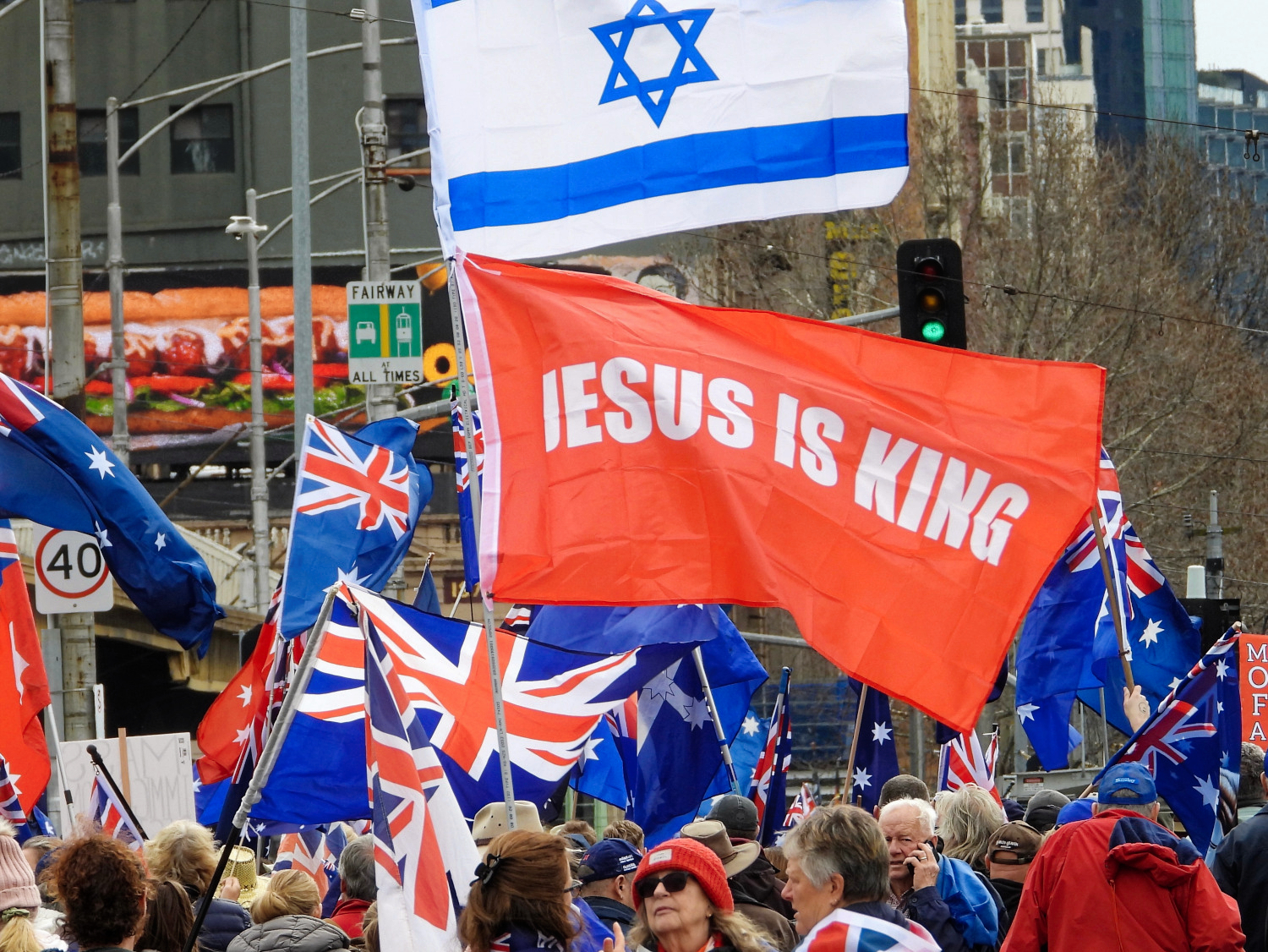
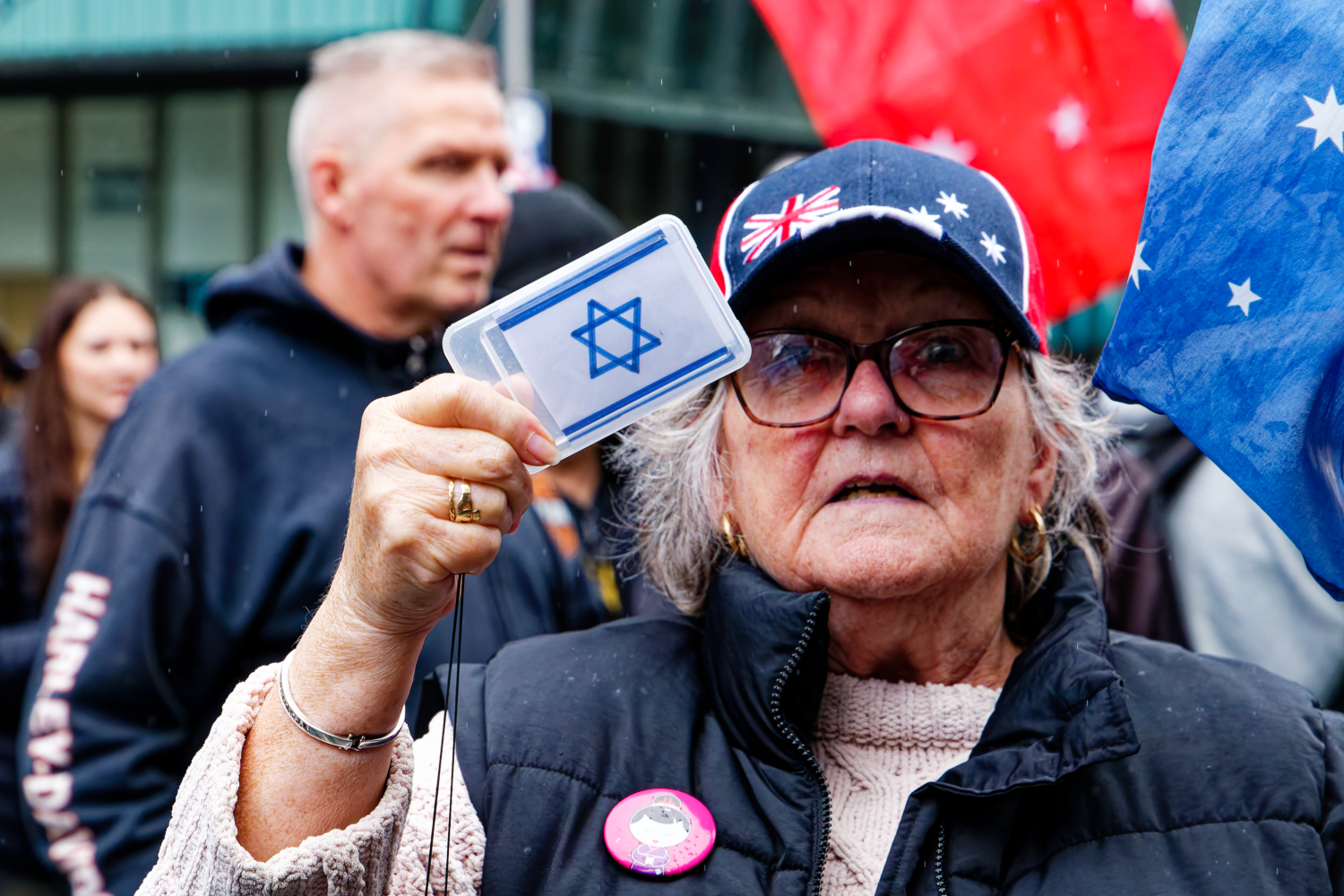
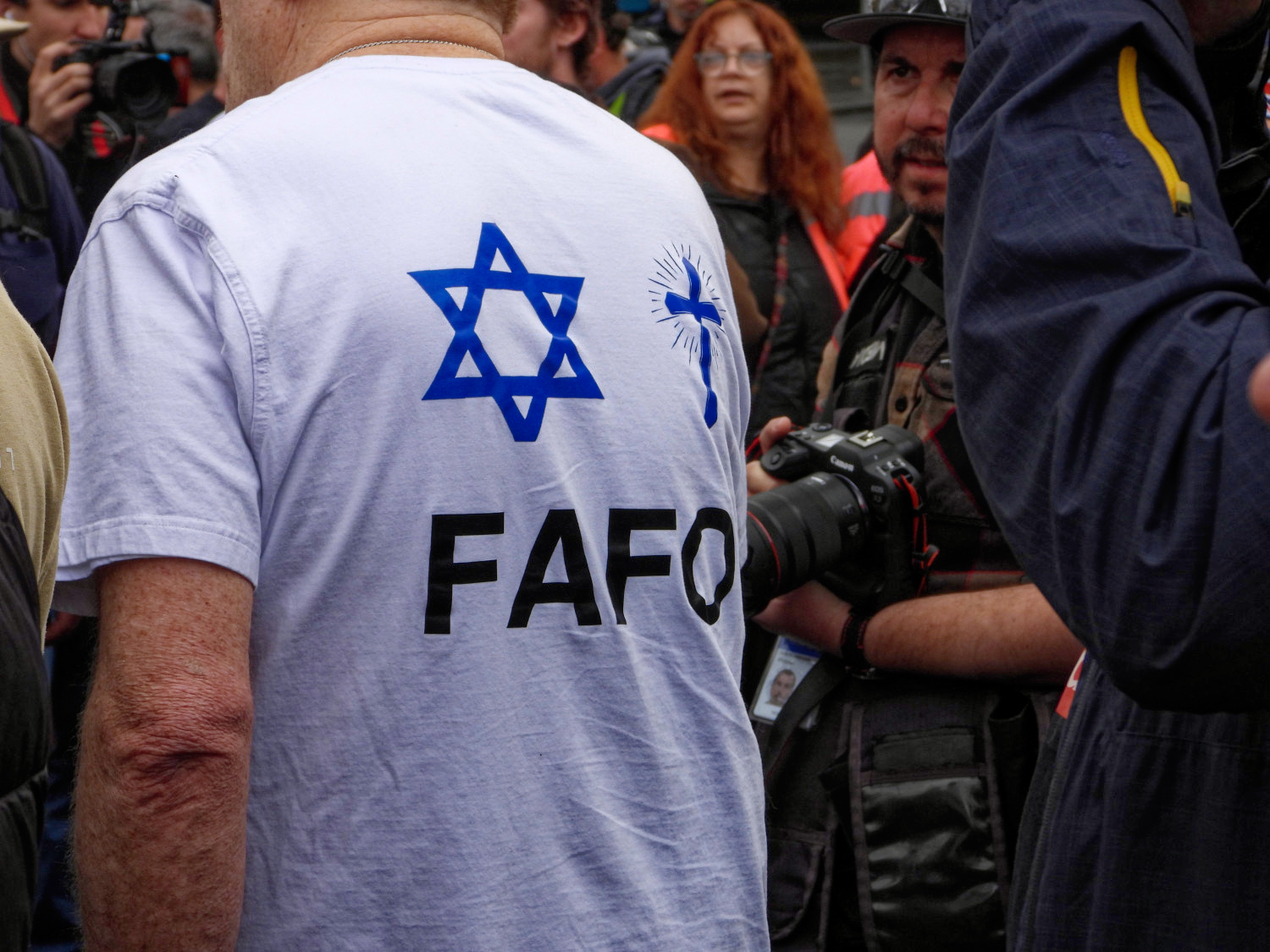
In August members of the National Socialist Network with other far-right anti-immigration activists organised rallies around Australia.
Segal’s failure to condemn those rallies was noted and criticised on social media. In Melbourne, pro-Israel Zionists were a visible cohort in attendance with neo-Nazis.
Stealthy implementation
Senator Bligh: Have you had any indication from the government on the anticipated timeframe for the full response and implementation [of the Envoy’s plan].
https://www.youtube.com/watch?v=wblczlYbraI
Segal: If I can talk to that, because that’s a question a lot of people ask me. I view it a little differently, I see the plan as the Envoy’s plan and if you read it in most places it talks about the work of the office, with the support of government, with the support of state government, with the support of other stakeholders.
So, I have continued to work in delivering the plan and in delivering the plan in a particular area, for example universities or education, I have had support from the government.
In July, Segal delivered to government the Special Envoy’s Plan to Combat Antisemitism. At the media conference the Prime Minister, Anthony Albanese said “we’ll now carefully consider the report recommendations“.
Casualties of war
Segal is also a member of the International Board of Israel’s Weizmann Institute of Science which was heavily damaged in a missile strike during the recent Israel-Iran 12 day war.
The Weizmann Institute was founded in 1934 and is widely believed to be a key research facility in the development and maintenance of the secret Israeli nuclear weapons program.
During the Nakba (1948 war) then scientific director of the institute, Ernst David Bergmann “effectively turned the institute into a HEMED base and subordinated much of its research effort to the needs of the Haganah“.
The Haganah was a Zionist paramilitary organisation, labelled by many as terrorists, and served as the core of the future IDF after the Nakba.
The Weizmann Institute of Science remains a major pillar in Israel’s weapons development program.
My journalism is free to access, creating it cost money.
Please help out if you can by kicking in a few bucks to keep it ticking over.
Related: OPINION: Segal’s anti-Semitism plan a Great Dividing Range




Leave a Reply
You must be logged in to post a comment.